
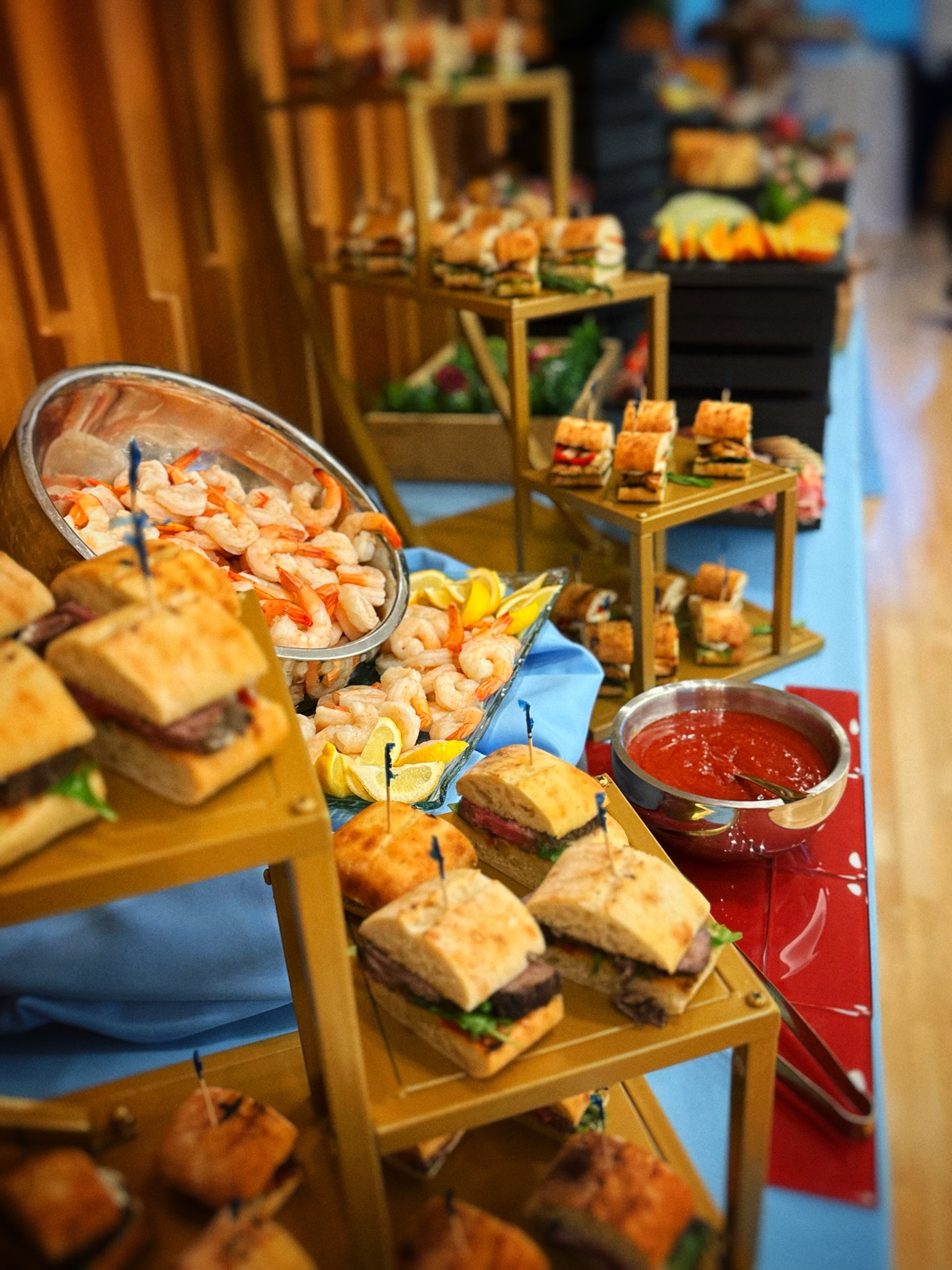
Budget is one of the most important parts of planning an event.
It is also one of the topics people are often the most hesitant to talk about.
That can make planning harder than it needs to be.
At Two Guys Catering, we have been doing this since 2015.
We are here to help.
If you have a budget, tell us.
We do not need to spend all of it.
We need to understand it so we can help you make the smartest decisions with it.
The goal is not to spend your budget. The goal is to build the best event your budget can support.
That is the difference.
Why Hiding Your Budget Usually Wastes Everyone’s Time
One of the biggest problems in event planning is building a proposal without understanding what the client is actually comfortable spending.
It creates unnecessary guesswork.
We can spend hours designing a beautiful event only to discover that the proposal is double the client’s budget.
That helps nobody.
But the opposite can happen too.
We may build something intentionally conservative because we do not know the budget, and the client looks at the proposal and thinks:
“This company cannot handle the kind of event I’m trying to throw.”
Meanwhile, we absolutely could have built it—we just did not know what level of event they wanted.
That is why budget conversations matter.
Knowing the budget does not limit creativity.
It gives us the information we need to build the right version of the event from the beginning.
A five-minute budget conversation can save hours of building, revising, and rebuilding proposals that were never going to be the right fit in the first place.
Give Us the Budget
We understand why clients sometimes hesitate.
Nobody wants to feel like they are handing over a number just so someone can find a way to spend every dollar of it.
That is not how we look at it.
We have been doing this since 2015. We are here to help.
If you give us a realistic budget, it lets us build intelligently around it.
Maybe that means simplifying the service style.
Maybe it means shifting money away from rentals and toward better food.
Maybe it means reducing labor in one area so we can protect quality somewhere else.
Maybe it means telling you that you do not need to spend the full amount.
That is completely fine.
Sometimes the smartest plan is actually simpler.
Use our experience.
Tell us the number.
Let us help you make the right decisions with it.
Where Does a Catering Budget Actually Go?
A catering proposal is rarely just food.
Depending on the event, your budget may include:
- food
- chefs
- servers
- bartenders
- event captains
- delivery
- setup
- breakdown
- rentals
- china
- flatware
- glassware
- linens
- specialty equipment
- bar supplies
- ice
- mixers
- venue requirements
- taxes
- service charges
- overtime
- specialty dietary meals
- additional event logistics
This is why two catering proposals can have very different totals even when the menus initially appear similar.
You have to look at the entire event.
Food
Food is usually the first thing people think about when they think about catering cost.
But even within the menu, there are major variables.
Guest Count
This is the obvious one.
More guests means more food.
But guest count can also increase staffing, rentals, equipment, delivery needs, and setup requirements.
Going from 50 guests to 150 guests does not simply mean tripling one tray of food.
The whole operation changes.
Protein Selection
Proteins can have a significant effect on menu cost.
Filet, premium seafood, and specialty cuts are naturally going to affect a budget differently than chicken, pasta, or other options.
That does not mean you need to choose the cheapest menu.
It means we can help you balance it.
Sometimes one premium entrée paired with a more approachable second entrée creates a better overall menu than trying to put two expensive proteins on the same buffet.
Quantity Matters Too
There is a difference between controlling food cost and cutting portions too close.
For buffet service especially, we need enough food to protect the guest experience.
Running out of the popular entrée with half the room still waiting to eat is not where anyone wants to be.
Planning an adequate amount of food is part of the budget.
Staffing
Labor is one of the biggest pieces of a full-service event.
A wedding or large event may require:
- chefs
- prep cooks
- servers
- bartenders
- captains
- setup staff
- breakdown staff
- dish staff
- runners
Those people are working before the first guest arrives and often long after the last guest leaves.
That matters when comparing catering proposals.
Service Style Changes Staffing
A buffet may require fewer servers than a plated dinner.
That reduced labor requirement can sometimes give us room to carry more food or improve the menu somewhere else.
Plated service usually requires more staff because meals are being assembled and delivered directly to guests.
Chef-attended stations can also increase labor because every station may need dedicated culinary support.
There is no universal cheapest option.
The menu and service style have to be evaluated together.
Rentals
Rentals can quietly become a large portion of the budget.
Depending on the venue and event, you may need:
- dinner plates
- appetizer plates
- flatware
- glassware
- napkins
- table linens
- cocktail tables
- buffet tables
- serving equipment
- specialty serving pieces
- warming equipment
Some venues provide much of this.
Others provide almost nothing.
That is why venue selection can have a much bigger impact on your catering budget than people sometimes realize.
Do You Need Every Upgrade?
Not necessarily.
This is an area where we can help determine what actually improves the event and what does not.
If a premium rental package adds thousands of dollars but does very little for the guest experience, that may not be the best place to put the money.
On the other hand, certain rentals may be essential to executing the service properly.
The goal is to spend intentionally.
Service Style
Your service style affects nearly every part of the catering budget.
Buffet
Buffets can reduce service labor compared with plated meals, but you still need proper setup, replenishment, guest-flow planning, and enough food to keep the line stocked.
Plated
Plated service usually requires more labor, more coordination, and tighter timing.
It may also require additional china, service equipment, and kitchen infrastructure.
Stations
Stations can be highly interactive and memorable, but chef-attended stations may require more culinary staff, equipment, electrical access, and setup.
The best service style is not simply the cheapest.
It is the one that creates the right event while staying within a budget that makes sense.
Bar Service
Bar costs can involve much more than alcohol.
Depending on the event, you may also need:
- bartenders
- barbacks
- ice
- mixers
- garnishes
- disposable cups or glassware
- coolers
- tubs
- bar equipment
- tables
- setup
- breakdown
If a client is providing their own alcohol, that can change the structure of the budget, but the service and infrastructure still need to be considered.
Delivery, Loading & Logistics
This is one of the areas clients rarely think about until event day.
How easy is it to physically get the catering operation into the venue?
Is there a loading dock?
Can the truck pull close to the kitchen?
Is the event on the third floor?
Is there an elevator?
Is parking several hundred feet away?
Are we working on a beach?
Is the ceremony and reception in two different locations?
How far is the venue from our kitchen?
Logistics create labor.
And difficult logistics create more labor.
Two venues with the same guest count and menu can require very different amounts of work.
Setup & Breakdown
If an event begins at 6:00 PM, that does not mean the catering team starts working at 6:00 PM.
A full-service event may require hours of setup beforehand.
Then after the event, everything has to come back down.
Equipment gets packed.
Rentals get organized.
Trash gets removed.
Food gets handled properly.
Trucks get loaded.
The venue gets cleared.
Those hours are part of the event whether the guests see them or not.
Venue Requirements
Every venue is different.
Some may require:
- specific insurance
- approved vendors
- additional staffing
- kitchen fees
- security
- generators
- tenting
- specialty equipment
- additional rentals
- strict load-in or load-out windows
Understanding those requirements early can prevent budget surprises later.
The Costs People Forget
There are always a few.
Common examples include:
- cake cutting
- coffee service
- late-night snacks
- additional dietary meals
- vendor meals
- additional rental deliveries
- overtime
- event extensions
- additional bartenders
- additional servers
- extra ice
- power or generator needs
- rain-plan changes
- long-distance delivery
- parking fees
- specialty equipment
None of these are necessarily major problems.
They become problems when nobody planned for them.
Service Charges, Gratuity & Taxes Are Not the Same Thing
This is one of the most common sources of confusion in catering.
A service charge does not automatically mean gratuity.
Gratuity does not automatically mean a service charge.
And taxes are obviously something different entirely.
Every company structures these differently.
Before comparing proposals, make sure you understand:
- what the service charge covers
- whether gratuity is included
- what taxes apply
- whether there are administrative fees
- whether delivery or staffing fees are separate
Compare the final event cost, not just the first number you see.
How Do You Actually Save Money on Catering?
The answer is not always “buy cheaper food.”
Often, the smartest savings come from simplifying the event.
Simplify the Service Style
A properly executed buffet may accomplish everything you want without requiring the staffing of a plated dinner.
Reduce Unnecessary Rentals
If a rental upgrade does not meaningfully improve the guest experience, that money may be better spent elsewhere.
Build the Menu Intelligently
You do not necessarily need multiple premium proteins.
A well-designed menu can feel generous and elevated without every component being the most expensive option available.
Keep the Timeline Tight
Longer events mean more labor.
If staff are required onsite for several additional hours, the cost adds up.
Use the Venue Wisely
If a venue already provides tables, chairs, china, glassware, or kitchen equipment, use that to your advantage.
Protect the Parts Guests Actually Notice
This is important.
There is a difference between saving money and making an event feel cheap.
Good food.
Proper staffing.
Clean presentation.
Adequate portions.
Smooth service.
Those are not the places we want to gamble.
A Smaller Budget Does Not Mean a Bad Event
Some of our best events are not the most expensive ones.
They are the ones where the priorities are clear.
If we know what matters most to you, we can help allocate the budget accordingly.
Maybe the food matters more than upgraded linens.
Maybe a buffet makes more sense than plated service.
Maybe we simplify the appetizer menu and protect the dinner.
Maybe you want one unforgettable station instead of three average ones.
Those are good decisions.
A budget should force prioritization.
It should not force a bad event.
What If You Honestly Don’t Know Your Budget?
That is completely normal.
A lot of people have never planned a catered wedding, fundraiser, corporate event, or large private party before.
You may genuinely have no idea what it should cost.
If that is the case, start with a different question:
How Much Do You Absolutely Not Want to Spend?
Maybe you do not know whether the event should cost $8,000, $12,000, or $18,000.
But you might know:
“I absolutely do not want this turning into a $20,000 catering bill.”
Perfect.
Now we have somewhere to start.
Tell us the number that makes you uncomfortable.
From there, we can explain what is realistic underneath that ceiling, what choices have the biggest impact on cost, and what type of event we can build without crossing the line you have set.
You do not need to walk into the conversation knowing exactly what catering should cost.
That is part of what we are here to help you understand.
With experience catering since 2015, we can help you work backward from the experience you want and determine what makes sense financially.
The important thing is that we are having the conversation.
Explore our menus, staffed catering, drop-off catering, and bar services with catering. For a closer look at how service affects the plan, read buffet vs. plated vs. stations or how to compare catering proposals.
Frequently Asked Questions
Should I tell my caterer my budget?
Yes. A realistic budget helps your caterer recommend appropriate menus, staffing levels, service styles, and rentals. It does not mean the full budget needs to be spent.
Will a caterer automatically spend my entire budget?
They should not. At Two Guys Catering, the purpose of knowing the budget is to design the event intelligently. If the event you want can be executed properly for less, there is no reason to spend money simply because it is available.
What affects catering cost the most?
Guest count, menu selection, service style, staffing, rentals, venue requirements, bar service, event length, and logistics can all significantly affect the final cost.
Is buffet catering cheaper than plated service?
It can be, particularly because buffet service may require fewer servers. But menu selections, food quantities, rentals, staffing, and venue requirements all affect the final number.
How can I lower my catering budget without hurting the event?
Focus on simplifying service, reducing unnecessary rentals, choosing the menu strategically, controlling event length, and protecting the elements guests notice most: food quality, portions, cleanliness, and service.
Can Two Guys Catering help build an event around a specific budget?
Yes. That is exactly what we are here to do.
Planning an Event in Southwest Florida?
Do not be afraid to talk about the number.
Tell us what you are planning.
Tell us what matters most.
And if you already have a budget, give us the budget.
If you do not know your budget yet, tell us the number you do not want to cross.
We have been doing this since 2015.
Let us help you decide where the money matters, where it does not, and how to build the strongest event possible without spending money simply because it is there.
Budget is not the enemy. A bad plan is.
Start Planning Your Event